

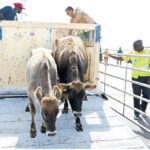
The decision to import heifers from Canada last December to increase Barbados’ milk production has not yet yielded the desired result, as farmers continue to face challenges with successfully inseminating a sufficient number of cows.
Chief executive officer of the Barbados Agricultural Society (BAS), James Paul, said corrective measures have been put in place, with expectations that production levels will stabilise in the coming months.
“We have seen challenges in getting a sufficient number of cows pregnant,” Paul said, disclosing that none of the cows has been successfully inseminated. “It is a serious issue that we are working on by making adjustments to their nutrition and ensuring that best management practices are followed on farms. Improving insemination rates is key to increasing herd numbers and ultimately milk production.”
More expensive
He told the DAILY NATION the imported animals were more expensive than usual due to global food supply issues and rising costs in the United States. Additionally, a ban on the importation of cow milk into the US further complicated sourcing efforts. As a result, Barbados turned to Canada, which has remained free of bird flu concerns affecting livestock.
The imported 180 pregnant heifers from Canada came at cost of $2.6 million. Farmers benefited from an 80 per cent rebate, effectively reducing their cost by $1.7 million.
“These animals arrived in December and have since been distributed to various farms across the island. The goal is to ensure they are properly utilised so that Barbados can reap the full benefits of this investment. We expect these benefits to materialise in the form of increased milk production,” Paul stated.
While some of the heifers have already begun producing milk after giving birth, farmers have faced certain management challenges that required intervention. To assist with this, representatives
from the Canadian suppliers visited Barbados to assess the animals’ condition and provide recommendations.
“One of the major issues identified was forage management. We do not have adequate forage supplies and there are deficiencies in how existing forage is managed. To address this, we are looking at acquiring the necessary equipment and implementing improved practices to enhance the nutritional intake of the animals,” the BAS chief explained.
Nutrition, he stressed, plays a critical role in ensuring cows can calve successfully and be readied for artificial insemination.
Despite these setbacks, Paul remains optimistic that milk production will rebound in the coming months. December saw one of the lowest production levels in recent history, but with proper management and adherence to recommended practices, he expects improvements to be evident by mid-year.
“We are hoping that by mid-July, we will begin to see tangible changes. The long-term goal is to return to an annual production target of six million kilogrammes of milk. Achieving this will depend not only on the performance of the imported heifers but also on improvements in local breeding practices,” he said.
Paul reiterated that while the current challenges will not be resolved overnight, the BAS is committed to supporting farmers in adopting changes needed to ensure milk production growth in Barbados. (CLM)
The post Not enough imported heifers getting pregnant to boost milk output appeared first on nationnews.com.